
 Get a Quote

 Send Inquiry
Calcium Chloride
Price 21 INR/ Kilograms
MOQ : 200 Kilograms
Calcium Chloride Specification
- Poisonous
- Non-toxic
- Properties
- Highly soluble in water, hygroscopic, creates exothermic reaction when dissolved
- Appearance
- White
- Taste
- Salty
- Purity
- 95% to 99%
- Grade
- Industrial/Technical/Pure
- EINECS No
- 233-140-8
- Shape
- Crystalline / Powder
- Melting Point
- 772C
- Usage
- Industrial, food, laboratory applications
- Ph Level
- 8.0 to 9.0 (10% w/v solution)
- Density
- 2.15 Gram per cubic centimeter(g/cm3)
- Storage
- Store in a cool, dry place, tightly closed containers
- Physical Form
- Powder / Granules
- CAS No
- 10043-52-4
- Shelf Life
- 2 years
- Application
- De-icing, dust control, concrete accelerator, refrigeration brines
- Refractive Rate
- 1.439
- Structural Formula
- ClCaCl
- Molecular Formula
- CaCl2
- Product Type
- Inorganic Compound
- Molecular Weight
- 110.98 g/mol
- Ingredients
- Calcium and Chlorine
- HS Code
- 28272000
- Smell
- Odorless
- Solubility
- Readily soluble in water
- Critical Temperature
- 369C
- Thermal Conductivity
- 0.436 W/mK at 25C
- Signal Word
- Warning
- Grade Standard
- Food Grade, Industrial Grade, Laboratory Grade
- Boiling Point
- 1600C
- EC Number
- 233-140-8
- Stability
- Stable under recommended storage conditions
- Hazard Statements
- Causes serious eye irritation
- Compatibility
- Avoid contact with strong acids
- UN Number
- UN1748
- Corrosivity
- Corrosive to metals
- Ionic Strength
- Strong electrolyte
- Odor Threshold
- Odorless
- Ecotoxicity
- Non-hazardous to environment under typical use
- Granule Size
- 1-4 mm (for granules)
- Packing Type
- HDPE bags, Jumbo bags, 25/50 kg packaging
- Moisture Content
- 1%
Calcium Chloride Trade Information
- Minimum Order Quantity
- 200 Kilograms
- Supply Ability
- 10000 Kilograms Per Day
- Delivery Time
- 1 Days
Calcium Chloride About
Available in 99% pure form, Calcium Chloride is known for its balanced composition. Its PH value ranges between 7.5 to 11.0 and it can be stored for 24 months. Water solubility of its anhydrous and dehydrate forms is maximum 0.25% and 0.15% respectively. Its melting point is 782 degree C and its molar mass is 110.98. Provided Calcium Chloride has 2.15 g/cm3 density and its boiling point is 1600 degree C. Pure content, standard shelf life and stable chemical attributes are its key features.
Product details
|
Purity % |
74-75% |
|
Packaging Details |
50 Kg Bag |
|
Grade Standard |
Industrial Grade |
|
Physical form |
powder |
|
Usage/Application |
Industrial |
Technical Details 
Premium Quality Calcium Chloride for Multiple Industries
Our calcium chloride, available in powder or granule form, meets food, industrial, and laboratory standards, with a purity of up to 99%. It is carefully manufactured to ensure optimal performance in moisture control, de-icing, and specialized chemical processes. Packaged securely in HDPE or jumbo bags, it remains stable and effective for up to two years.
Applications Across Diverse Sectors
Calcium chlorides unique propertieshigh solubility, strong electrolyte nature, and exothermic dissolutionmake it indispensable in industries like construction (as a concrete accelerator), food processing, and environmental control (de-icing, dust suppression). Its food-grade variant is suitable for dietary and preservation uses, while the industrial variety excels in processes requiring moisture absorption or temperature moderation.
Safe Handling and Storage Guidelines
Calcium chloride should be stored in tightly sealed containers in a cool, dry location. As it is hygroscopic and corrosive to metals, direct contact with metals and strong acids should be avoided. While non-toxic, it can cause serious eye irritation upon contact; appropriate personal protective equipment is recommended during handling.
FAQs of Calcium Chloride:
Q: How should calcium chloride be stored to maintain its quality?
A: Calcium chloride must be stored in tightly closed HDPE or jumbo bags, kept in a cool, dry place to prevent moisture absorption and clumping. Avoid contact with metals and strong acids, as it is corrosive and highly hygroscopic.Q: What are the main uses and benefits of calcium chloride in various industries?
A: Calcium chloride is widely used for de-icing roads, controlling dust, accelerating concrete curing, food preservation, and as a refrigeration brine. Its high solubility, strong electrolytic properties, and ability to absorb moisture enhance industrial, food, and laboratory processes.Q: When is calcium chloride most effectively applied for de-icing purposes?
A: Calcium chloride is best applied before or during snowfall to prevent ice bonding and facilitate melting at lower temperatures than traditional salts, thanks to its exothermic dissolution and hygroscopic nature.Q: What processes are involved in the production and packing of calcium chloride?
A: Calcium chloride is typically produced by reacting limestone with hydrochloric acid or as a byproduct of the Solvay process. The final product is purified, dried, and packed in HDPE or jumbo bags (25/50 kg) to ensure stability and quality during transport and storage.Q: Where can food-grade calcium chloride be safely used?
A: Food-grade calcium chloride is used in food processing industries for cheese making, pickling, and as a firming agent for fruits and vegetables. It meets regulatory standards for safety and purity, ensuring suitability for consumption-related applications.Q: Is calcium chloride safe for the environment and personal use?
A: Calcium chloride is non-toxic and non-hazardous to the environment when used appropriately. However, it is corrosive to metals and can cause eye irritation, so basic protective measures are required during handling. It is stable and safe under recommended conditions.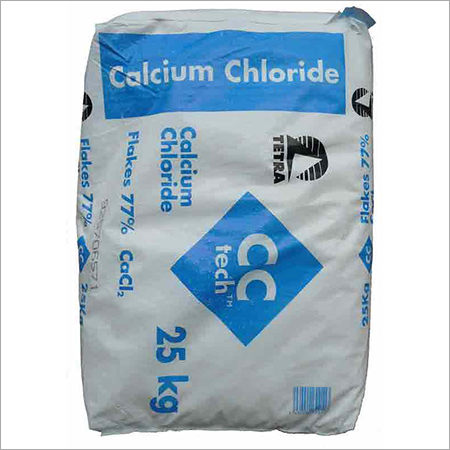
Tell us about your requirement

Price:
Quantity
Select Unit
- 50
- 100
- 200
- 250
- 500
- 1000+
Additional detail
Mobile number
Email

More Products in Chemical Compound Category
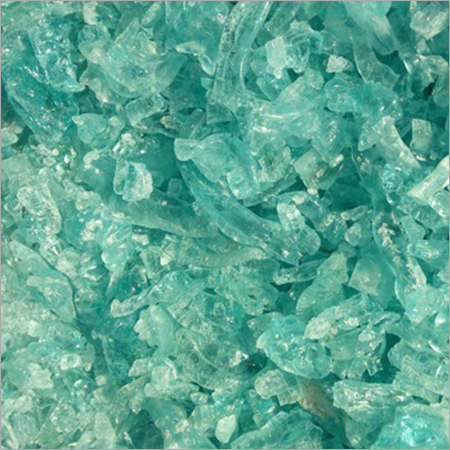
Sodium Silicate Glass
Price 20 INR / Kilograms
Minimum Order Quantity : 200 Kilograms
Solubility : Soluble in water, insoluble in alcohol
Purity : 99%
Physical Form : Other, Glass Lumps
Storage : Other, Store in a dry, cool, and wellventilated place
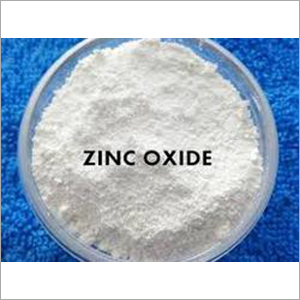
Zinc Oxide White Seal Ceramic Grade
Price 210 INR / Kilograms
Minimum Order Quantity : 200 Kilograms
Solubility : Insoluble in water, soluble in acids and alkalis
Purity : 99.5% minimum
Physical Form : Powder
Storage : Other, Store in cool, dry place, keep container tightly closed
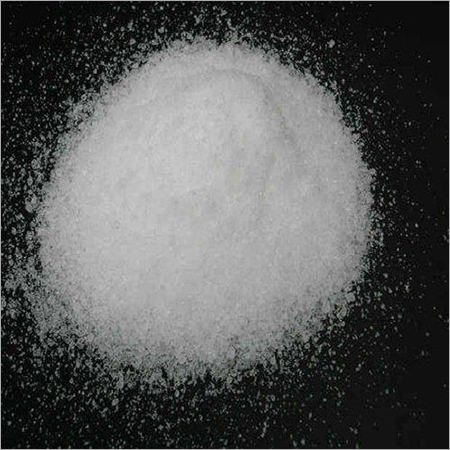
Calcium Acetate
Solubility : Soluble in water slightly soluble in ethanol
Purity : 99% minimum
Physical Form : Other, Granules or powder
Storage : Other, Store in a cool dry place in tightly sealed containers
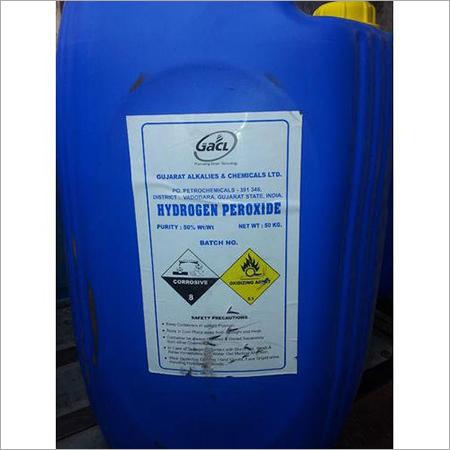
Hydrogen Peroxide
Price 29.5 INR / Kilograms
Minimum Order Quantity : 200 Kilograms
Solubility : In Water
Purity : 99%
Physical Form : Liquid
Storage : Room Temperature

Contact Details
- 212, K10 GRAND, B/H Atlantis K10, Sarabhai Campus Genda Circle, Alkapuri Road,Vadodara - 390007, Gujarat, India
- Phone : 08045804226
- Mr Sanjay Rupala (Proprietor)
- Mobile : 08045804226
- Send Inquiry
SGS CHEMICALS
GST : 24AVNPR8300A1ZT
GST : 24AVNPR8300A1ZT
 Send Inquiry
|

 Send Inquiry
 Send SMS
SGS CHEMICALS
All Rights Reserved.(Terms of Use)
Developed and Managed by Infocom Network Private Limited.
Developed and Managed by Infocom Network Private Limited.


 English
 Spanish
 French
 German
 Italian
 Chinese (Simplified)
 Japanese
 Korean
 Arabic
 Portuguese