
 Get a Quote

 Send Inquiry
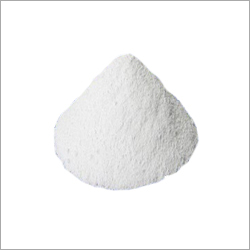
Sodium Try Poly Phosphate
MOQ : 200 Kilograms
Sodium Try Poly Phosphate Specification
- Other Names
- STPP
- Taste
- Alkaline
- Purity
- >94%
- Shape
- Powder
- HS Code
- 28353100
- Molecular Weight
- 367.86 g/mol Grams (g)
- Form
- White crystalline powder
- Ph Level
- 9.2 10
- Structural Formula
- Na5P3O10
- Smell
- Odorless
- Density
- 2.52 Gram per cubic centimeter(g/cm3)
- Melting Point
- >600C (decomposes)
- Molecular Formula
- Na5P3O10
- Solubility
- Soluble in water
- Storage
- Keep in tightly closed container, dry and well ventilated place
- Poisonous
- No
- Classification
- Phosphate
- Chemical Name
- Sodium Tripolyphosphate
- CAS No
- 7758-29-4
- EINECS No
- 231-838-7
- Grade
- Industrial, Food Grade
- Standard
- GB/T 9983-2004
- Type
- Inorganic compound
- Usage
- Used as a cleaning agent, water softener, and emulsifier
- Main Material
- Sodium Tripolyphosphate
- Application
- Other
- Appearance
- White crystalline powder or granule
- Heavy Metals
- <10 ppm
- Shelf Life
- 24 months in original packaging
- Stability
- Stable under normal conditions
- Packaging
- 25 kg bags or as required
- Phosphate Content
- 57% - 59%
- Moisture Content
- 0.7% max
Sodium Try Poly Phosphate Trade Information
- Minimum Order Quantity
- 200 Kilograms
- Supply Ability
- 10000 Kilograms Per Day
- Delivery Time
- 1 Days
Sodium Try Poly Phosphate About
Sodium Try Poly Phostate is ideally suitable as a great preservative for meat as well as seafood. It is useful to make a smoother and glossier effect. It is prepared with the proper guidance and execution by our hardworking team members. It is water soluble and easy to use without facing any difficulty. Sodium Try Poly Phostate is mainly applied in domestic a well as industrial items. It can be made in various packaging options and customizations to our clients.
Comprehensive Applications
Sodium Tripolyphosphate serves multiple industries, from water treatment and food processing to ceramics and textile manufacturing. In detergents, it enhances cleaning efficacy and softens water by capturing unwanted ions. As an emulsifier, it stabilizes processed foods. Its versatility and high purity have made it a preferred choice across various applications globally.
Quality and Purity Assurance
With a minimum purity of 94% and controlled heavy metal content below 10 ppm, STPP meets stringent safety and quality standards. The product adheres to GB/T 9983-2004 and is available in both industrial and food-grade versions, catering to diverse end-use requirements and ensuring reliability for manufacturers and suppliers alike.
Safe Handling and Longevity
STPP is non-poisonous and odorless, making it safe to handle with standard precautions. To maintain its quality and shelf life, it must be stored in the original, tightly-sealed containers in a cool, dry, and well-ventilated area. Proper storage ensures reliability and performance for up to 24 months.
FAQs of Sodium Try Poly Phosphate:
Q: How is Sodium Tripolyphosphate commonly used in industry?
A: Sodium Tripolyphosphate is widely used as a water softener, cleaning agent in detergents, and as an emulsifier in food processing. It also finds applications in ceramics, textiles, and water treatment due to its excellent binding and sequestration properties.Q: What are the benefits of using Sodium Tripolyphosphate in detergents and water treatment?
A: In detergents, STPP improves cleaning efficacy by binding calcium and magnesium ions, preventing deposits and residue. In water treatment, it acts as an efficient sequestering agent, enhancing water quality by minimizing hardness and scaling.Q: When should Sodium Tripolyphosphate be replaced or disposed of?
A: Sodium Tripolyphosphate maintains its stability for up to 24 months when stored in its original, sealed packaging under recommended conditions. It should be replaced after its shelf life or if the product becomes contaminated or absorbs excess moisture.Q: Where should Sodium Tripolyphosphate be stored for optimal stability?
A: To ensure optimal stability and prolonged shelf life, STPP should be stored in a tightly closed container, away from moisture, and in a dry, well-ventilated area, preferably at ambient room temperature.Q: What is the process for handling and using Sodium Tripolyphosphate safely?
A: When handling STPP, use clean, dry equipment and avoid direct contact with skin or eyes. Ensure the area is well-ventilated, and always keep the material in its original, sealed container when not in use to prevent moisture absorption.Q: How does the high phosphate content benefit industrial applications?
A: The high phosphate content (57%59%) enhances STPPs efficiency as a chelating and dispersing agent, making it highly effective in cleaning, water treatment, and food processing by improving binding and emulsification.Technical Details 
Tell us about your requirement

Price:
Quantity
Select Unit
- 50
- 100
- 200
- 250
- 500
- 1000+
Additional detail
Mobile number
Email

More Products in Industrial Chemical Category
Sodium Bisulphite
Minimum Order Quantity : 200 Kilograms
Purity : Minimum 98%
Form : Other, Powder / Solid
Grade : Other, Industrial Grade, Food Grade
Solubility : Soluble in water
Sodium Meta Bisulphite
Price 53 INR / Kilograms
Minimum Order Quantity : 200 Kilograms
Purity : 98%
Form : Powder
Grade : Industrial Grade
Solubility : In Water

White Zinc Oxide
Price 228 INR / Kilograms
Minimum Order Quantity : 200 Kilograms
Purity : 98%
Form : Powder
Grade : Industrial Grade
Solubility : In Water

Sulphuric Acid Commercial Grade
Price 40 INR / Liter
Minimum Order Quantity : 200 Liters
Purity : 99%
Form : Liquid
Grade : Industrial Grade
Solubility : Soluble in Water easily

Contact Details
- 212, K10 GRAND, B/H Atlantis K10, Sarabhai Campus Genda Circle, Alkapuri Road,Vadodara - 390007, Gujarat, India
- Phone : 08045804226
- Mr Sanjay Rupala (Proprietor)
- Mobile : 08045804226
- Send Inquiry
SGS CHEMICALS
GST : 24AVNPR8300A1ZT
GST : 24AVNPR8300A1ZT
 Send Inquiry
|

 Send Inquiry
 Send SMS
SGS CHEMICALS
All Rights Reserved.(Terms of Use)
Developed and Managed by Infocom Network Private Limited.
Developed and Managed by Infocom Network Private Limited.


 English
 Spanish
 French
 German
 Italian
 Chinese (Simplified)
 Japanese
 Korean
 Arabic
 Portuguese